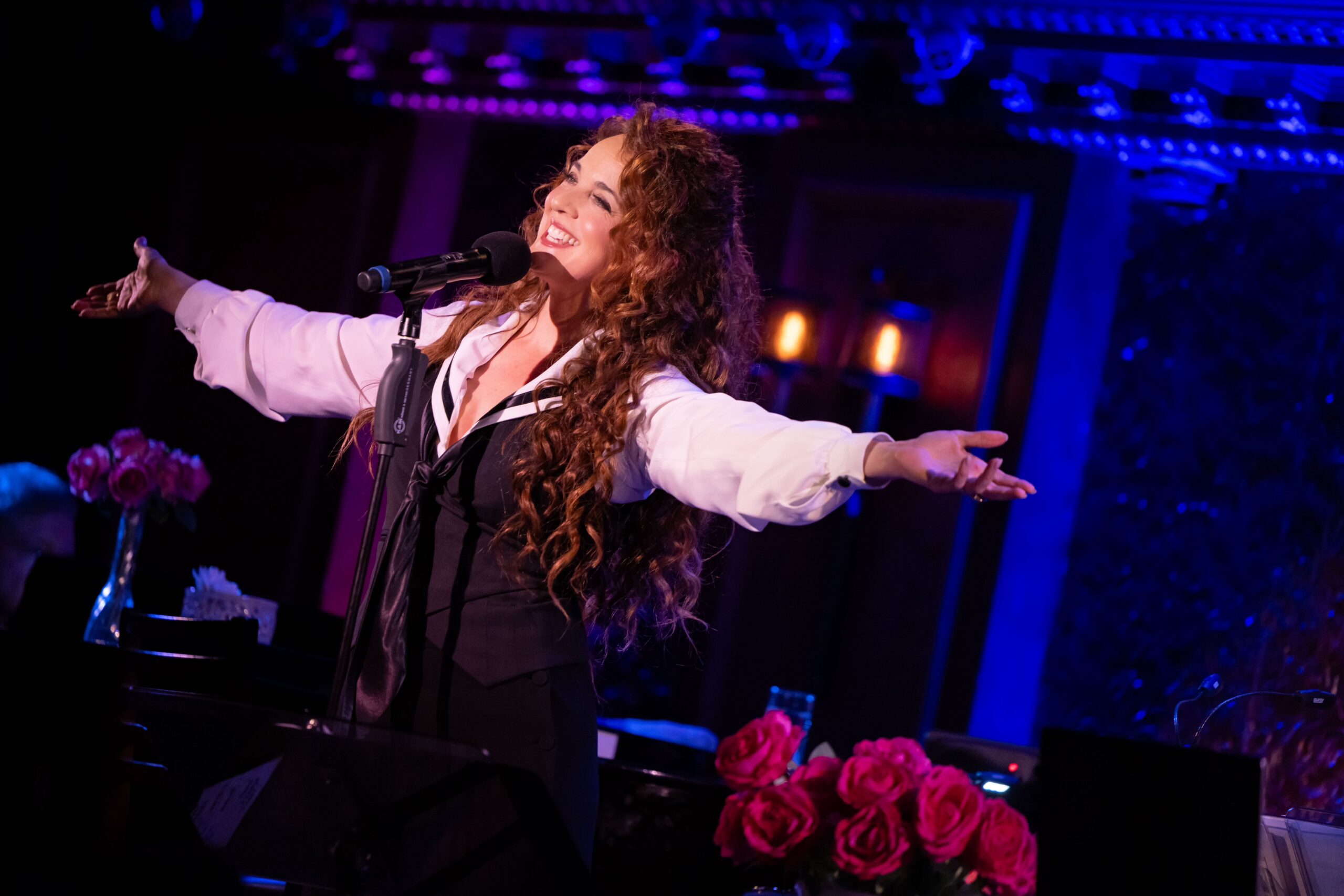
Melissa Errico Returns to The Smith Center with THE STREISAND EFFECT
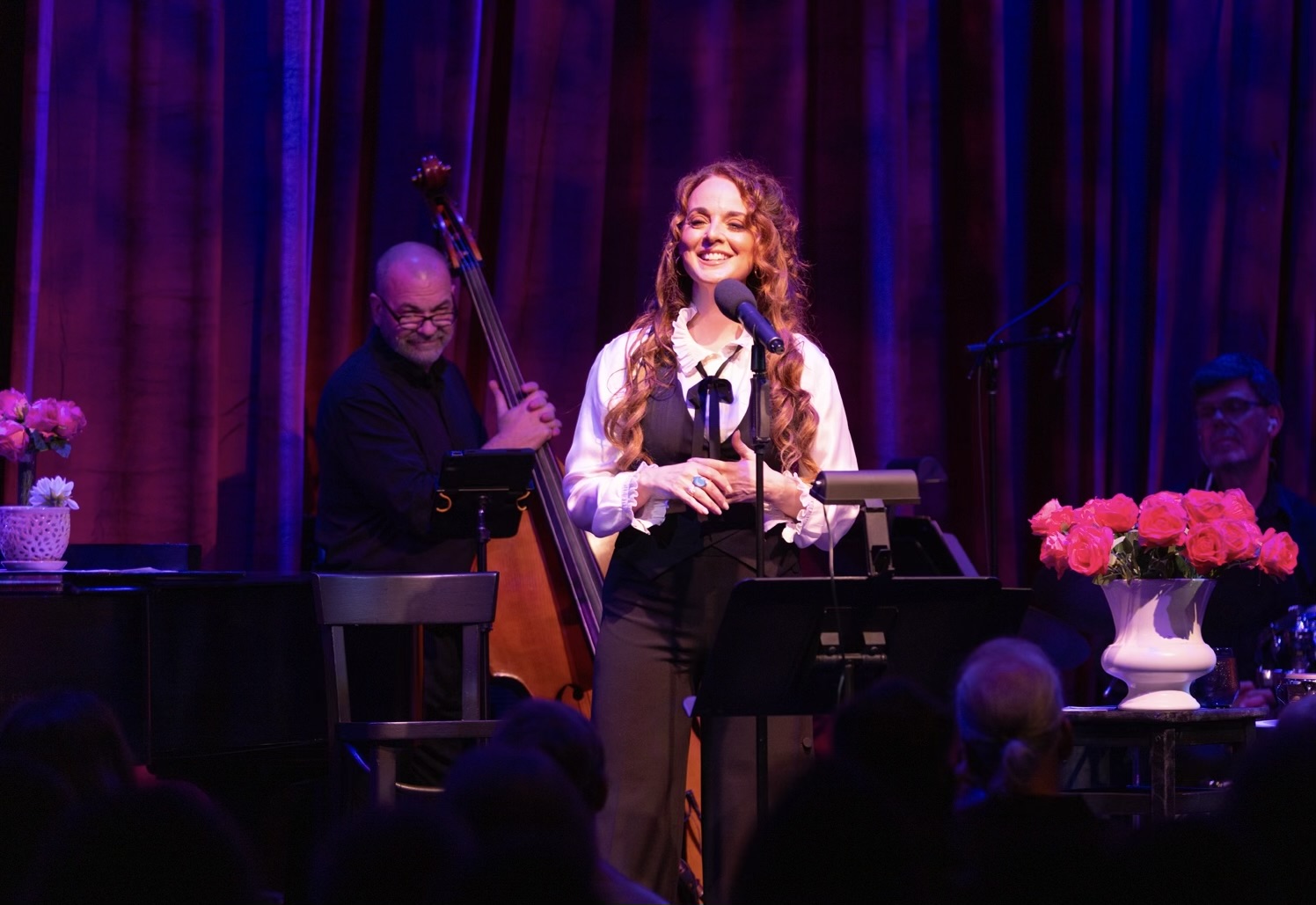
Your new album I Can Dream, Can’t I? draws from an incredible range of composers like Frank Loesser and Duke Ellington—what guided your song
selection process?
Tedd Firth, my genius pianist, arrived with a huge set of possible songs. My one rule in choosing among them was that they should be (relatively) obscure – not deep cuts so much as great songs that hadn’t been heard in a while. Like the title tune. I wanted a record where the songs were all sterling but where the listener’s understanding hadn’t been ‘prepped’ too much by a classic or ever-current version. I think we succeeded. They’re all the best songs by the best writers, but not necessarily the first song you think of. So, we have “Dancing on The Ceiling” the most amazingly poetic (and erotic) of Rodgers and Hart ballads, but not as worn smooth as, say, “My Funny Valentine”.
How do you approach reinterpreting such iconic material while still making it feel deeply personal?
I always try to sing from within. When I was making a recording of Alec Wilder’s beautiful “Blackberry Winter” during the pandemic, I caught myself whispering to myself, just before I began singing, “Make it personal!” We laughed when we heard the playback and kept it in! That’s the key: to find an immediate emotion, something real in your life, that can be passed prismatically through the song, so it comes out as the song’s emotion and as your emotion at the same time. So, this album is full of events and episodes (and emotions) from my own life, remade as classic songs. I can’t always itemize them, but they’re there.
What does the American Songbook mean to you today, and why is it still relevant for contemporary audiences?
I think Kenneth Tynan, the great New Yorker writer, said once that the American songbook –Porter and Kern and all the rest — was the classical music of the twentieth century, the real successors to Schubert and Schuman and all those guys. I completely believe that’s true. There’s no more ‘nostalgia’ or ‘retro’ singing in my work, at least for me, than there is when Renee Fleming sings Mozart. It’s classical music, evergreen, so melodically and harmonically evergreen, but also, because of its origins in popular entertainment, a music without pretension. Everyone gets it. That’s why I love it so.
Were there any songs on the album that surprised you in how they evolved during recording?
They all did, one way or another. But maybe the finale, Joni Mitchell’s classic “Both Sides Now”, was the one that really got me. I’ve been singing Joni for years, and there’s an ingenuous innocence to the song when you first encounter it – almost like a poem a gifted girl might write in high school. But now that I’m more mature, the sense of everything being double sided – clouds and love and life itself – feels like a permanent truth. I really have seen them all from both sides now, and still believe in their illusions. It’s nice to sing that as mature wisdom.
On The Streisand Effect
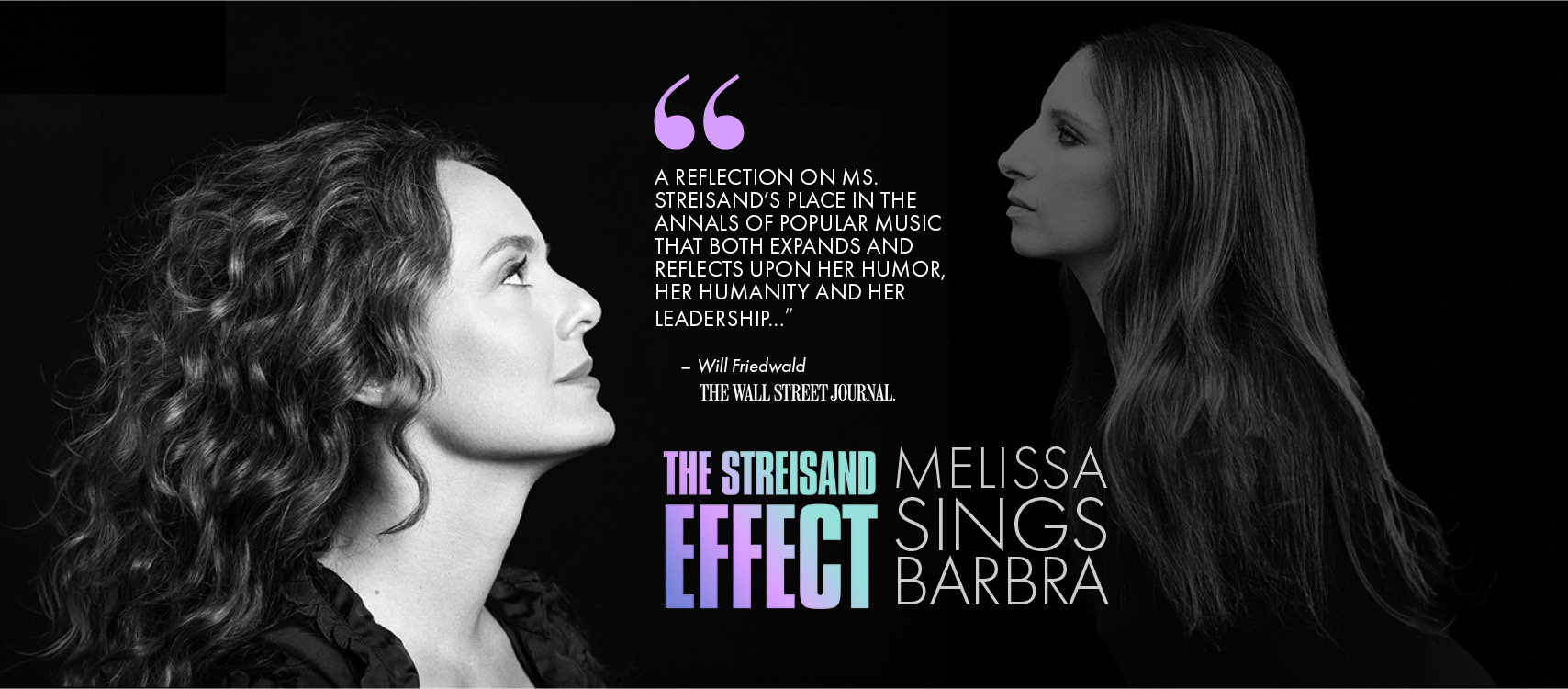
What inspired you to create The Streisand Effect as a concert experience rather than a traditional tribute?
I wanted to do something to honor her work and influence – but didn’t want it to be a wearying ‘tribute’ concert, where you run through the hits and everyone is comparing your sound with hers. I never enjoy those kinds of shows much. I wanted instead to do something that was what I think of as a ‘homage’ – a concert where her work and my work, however smaller scaled, shapes a kind of Venn diagram where you can spot the shared inspirations and influences. (Legrand! Sondheim!) and feel the way music passes from one generation to the next.
Barbra Streisand is such a towering figure—how did you decide which aspects of her artistry to explore?
I wanted to press hardest on her as an exemplary figure for the next generation of women performers. There’s a robust feminism to her example, but not one that’s too polemical. David Shire, who’s been writing for Barbra for fifty years(!) wrote a new song for me in honor of her, with words by Adam Gopnik, that tries to capture it. It’s called “Daughter of Fire” and it’s about how she taught my generation to be a little bit more fearless, and how I’m trying to pass that wisdom on to my own daughters.
The show touches on themes of mentorship and independence—how have those ideas shaped your own career?
I’ve been blessed with many great mentors, from Michel Legrand to Stephen Sondheim. (Steve was too ornery and independent to be a real mentor, but he valued teaching more than any other craft, and he couldn’t help but teach you an immense amount when you worked with him. He sent me so many letters that emanated a protective warmth.)
But I’ve also always tried to blaze my own path and make the music I wanted to rather than the music that would always be most obviously popular. One of my daughters sighed once and said, “The problem is that you shouldn’t just sing Stephen Sondheim.
You have to sing Taylor Swift!” So, at the end of one show, I brought out a cut-out of Taylor and sang one of her songs! It was great. But I’ll always sing what matters most to me.
How do you balance honoring Streisand’s legacy while maintaining your own distinct voice on stage?
That’s the task! I sing as me, valuing her. There’s no ‘imitation’ in the show. I think you’ll see (and hear.)
What did you think of Streisand’s performance during the 2026 Oscars show?
As with everything with her, it was distinctive and stood out above everything. She was utterly herself, and it was honest and real. I think we all know Barbra more and more since she wrote her book (48 hours of listening, I recommend the audio!). We know her as a woman of dimension, who has lived with us through time. She gave us the gift of seeing her again, as a completely real woman. She burst into song despite how much we all know she has always found live performing unnerving. What a generous thing to do. She looked like an artist, loose hair, glasses, cool funky gown… The truth is out, yet again. Barbra is an artist by nature, not a celebrity, who shares her truth.
On Career & Craft
You’ve had a remarkable career spanning Broadway shows like Les Misérables—how has your relationship to performing evolved over time?
My first great love was the musical theater. I fell in love with on my eleventh birthday when I saw “On Your Toes” for the first time, and I’ve never stopped loving it. From “My Fair Lady” to “Kiss Me Kate” , the need to make contradictory emotions work as take-away songs, the simplifications and the complications – it never stops moving me. But in the past decade I’ve been inexorably drawn to making my own way and writing my own shows and moving in an ever-more ‘jazz adjacent’ direction. I opened for George Benson at the Montreal jazz festival a couple of summers ago, in front of three thousand people, and at the end I could see in the eyes of his musicians that I’d pulled it off– done a Stevie Wonder song, something groovy that they recognized as their own kind of thing. It was a great moment – but then the next night I was singing Sondheim again. I love that oscillation.
As both a singer and writer, how do those two disciplines inform each other in your creative process?
I’ve loved to write and have been writing all my life, keeping diaries and journals and blogs and all the rest. But it’s only been in the past decade that I’ve been free to get myself fully expressed as a writer, with a regular column in the New York Times called “Scenes from An Acting Life”. I’ve written about remote auditioning, about the difficulties of classical musicals for feminist thought, and just generally about the life of a girl singer on the road. I absolutely love it, and having to organize my thoughts and feelings in words only deepens the way I can sing about them on stage. I like to think I’ve helped begin a whole new genre, the ‘caber-essay’ as we call it jokingly: a concert program that has a real shape and arc and surprise and meaning, as a great essay does, and that isn’t just “ For my next number…”
What continues to challenge you artistically at this stage in your career?
Bringing it all together! My experience as an actress – a word I still love – my growth as a singer, the pressure of the past and the hope of the future. Having three daughters launched into the world makes you hyper-aware of how every moment in life is a dialogue between past and present. I want to illuminate that truth in all my work.
Any final Thoughts?
I’m coming to Las Vegas — on March 28th! Let’s pack the house! I always laugh with the audience in Las Vegas at the end of my shows. It’s a funny thing how a city can feel like a friend. It does. I expect it will happen again — that feeling that: I know you, and you know me, and we had fun. When it first happened, years ago (and yes, I did get an unexpected and wonderful standing ovation), I thought “me? Vegas?” — I guess I felt I might be too brainy or too New York, not flashy and commercial enough — though let it be known, I do wear sequins and I hold nothing back!!– and then we all just laughed and laughed. I have come back to the Smith Center with so many concerts since. Something about Vegas feels right! I reach for my best self there. I’m not going to lead a conga line this year, but I do have a sudden idea I might try! To show the People Who Need People how lucky I am to be there. Stay tuned for a surprise!!